
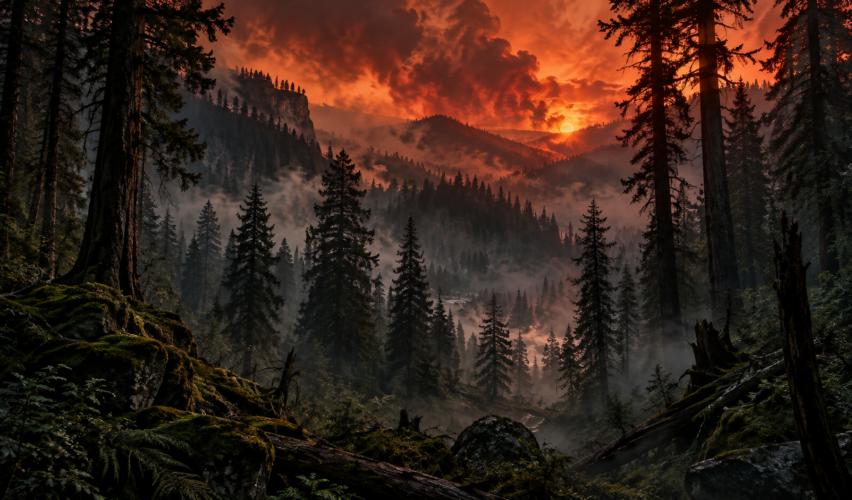
From ancient myths to modern climate movements, humanity has always been fascinated by the possibility of catastrophe.
Throughout history, humans have imagined the end of the world.
Ancient civilizations told stories of devastating floods, divine punishment, and cosmic destruction. Today, similar narratives appear in new forms, including discussions about climate change and environmental collapse.
But why are we so drawn to stories about the end?

An Ancient Story in a Modern World
In a research article titled Green Apocalypse, co-authored with Gabriel Levy, we explore how apocalyptic narratives emerge within contemporary environmental movements.
The similarities between traditional religious narratives and modern environmental warnings are fascinating.
Both can portray humanity approaching a moment of profound transformation. Both raise questions about responsibility, survival, and the consequences of human actions.
Yet recognizing these narrative similarities does not mean dismissing the scientific evidence for climate change.
Rather, it means exploring how human beings interpret genuine threats through familiar patterns of storytelling.


Why Our Minds Imagine Catastrophe
Human beings have an extraordinary ability to imagine possible futures.
We anticipate danger, simulate difficult situations, and create stories about what might happen if things go wrong.
From an evolutionary perspective, the ability to imagine adversity may have helped our ancestors prepare for uncertain environments.
Perhaps this also helps explain why narratives of catastrophe remain so powerful.
They can capture attention, generate emotional responses, and encourage people to think about their responsibilities toward the future.
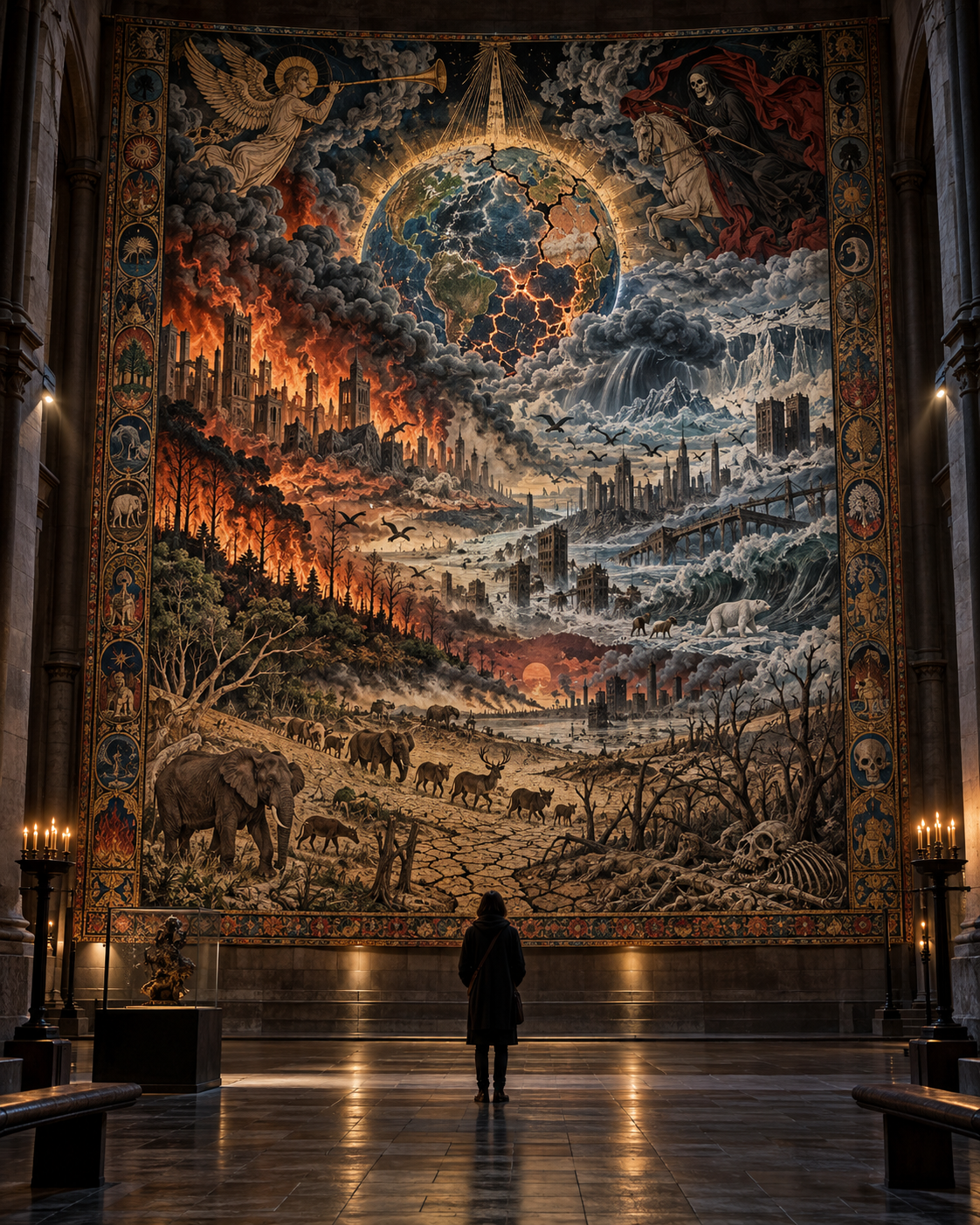

Between Fear and Hope
Apocalyptic stories do more than predict destruction.
They often communicate moral concerns, challenge established ways of living, and imagine a radically different world.
The important question is not simply whether these narratives inspire fear.
It is how they influence the way we understand problems, respond to uncertainty, and imagine possible solutions.
By studying the connections between ancient religious traditions and contemporary environmental movements, we can learn something fascinating about human nature.
Our stories about the end of the world may reveal as much about the human mind as they do about the future itself.
Halvor Kvandal




I started off at once for the Spotted Dog, for I knew the landlord had a horse and dog cart. I ran, for I perceived that in a moment everyone upon this side of the hill would be moving.
Sal said it wouldn’t do.
When the amphitheater had cleared I crept stealthily to the top and as the great excavation lay far from the plaza and in an untenanted portion of the great dead city I had little trouble in reaching the hills beyond.
But I got a dreaming and sprawling about one night, and somehow, Sam got pitched on the floor, and came near breaking his arm. Arter that, Sal said it wouldn’t do.